
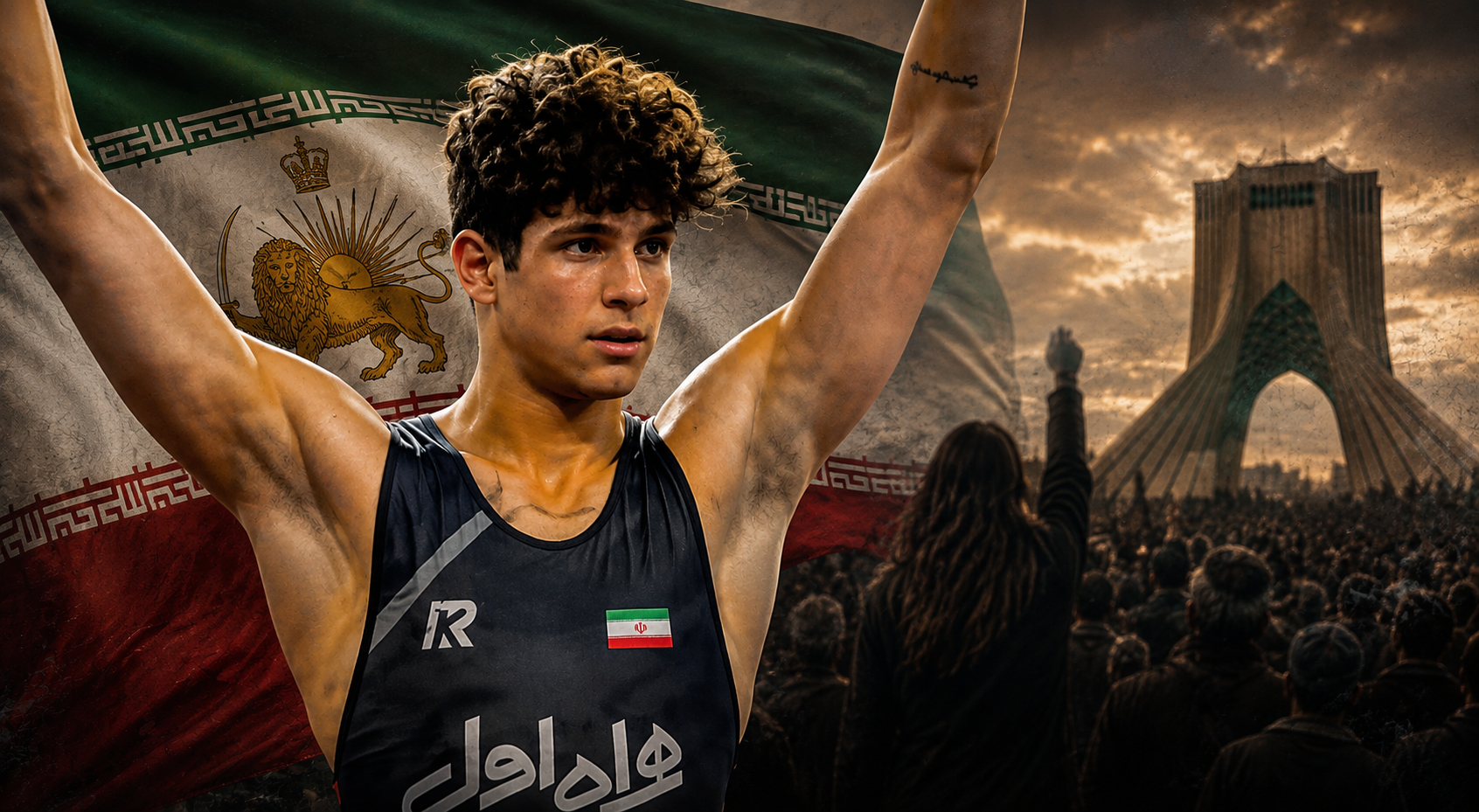
Iranian authorities executed 19-year-old wrestler Saleh Mohammadi on Thursday morning, March 19, alongside two other protesters detained during January’s nationwide anti-government demonstrations.
Mohammadi, Saeed Davoudi and Mehdi Ghasemi were hanged in Qom after being convicted in a case connected to the deaths of two police officers during protests in the city on January 8.
Iran’s judiciary says the three men were involved in the killings and convicted them of charges including murder and moharebeh, or “waging war against God.”
But serious questions surround the case, the evidence used against Mohammadi and the fairness of the proceedings that ultimately sent a 19-year-old protester to the gallows.
Who Was Saleh Mohammadi?
Saleh Mohammadi was a young Iranian wrestler from Qom.
He had turned 19 only eight days before his execution, on March 11.
Mohammadi had competed at a high level in wrestling and had participated in international competition. Reports described him as a bronze medalist at the 2024 Saitiev wrestling tournament in Russia.
He was arrested following the nationwide protests that erupted across Iran in late December 2025 and January 2026.
Those demonstrations initially grew out of severe economic frustration but rapidly developed into a much broader challenge to the Islamic Republic and its political leadership.
Mohammadi became one of the protesters facing the most severe punishment imposed by the Iranian state.
Why Was He Sentenced to Death?
According to Iran’s judiciary, Mohammadi and the two other defendants participated in the killing of two police officers during demonstrations in Qom on January 8.
The authorities accused them of murder and moharebeh and ultimately sentenced them to death.
But Mohammadi reportedly denied committing the murder.
Human-rights organizations and sources close to his family say he told the court that his recorded confession had been obtained under coercion and torture.
His relatives reportedly maintained that Mohammadi was at his uncle’s home at the time of the alleged crime.
According to human-rights reports, the court declined to summon defense witnesses who could potentially support that account.
The family also reportedly attempted to appoint independent lawyers, but their proposed attorneys were rejected and a court-appointed lawyer represented Mohammadi instead.
These allegations raise fundamental questions about whether the judicial process provided anything resembling the guarantees required in a case where a person’s life was at stake.
Executed Only Weeks After His Arrest
Mohammadi’s case moved with extraordinary speed.
He was detained in connection with the January protests, sentenced to death within weeks, and executed on March 19.
Iranian judicial authorities said the Supreme Court had upheld the sentences.
On Thursday morning, the three men were hanged in Qom “in the presence of a group of people,” according to the judiciary-linked Mizan News Agency.
They are the first protesters known to have been executed in connection with the nationwide demonstrations of December 2025 and January 2026.
Their executions now raise fears that many more detainees could face the same fate.
Human-Rights Groups Condemn the Executions
Iran Human Rights strongly condemned Thursday’s executions, describing them as extrajudicial killings intended to terrorize society and suppress political dissent.
The Center for Human Rights in Iran likewise said the three men had been subjected to grossly unfair proceedings and alleged that forced confessions were obtained under torture.
Human-rights organizations have repeatedly warned that protesters facing capital punishment in Iran are frequently denied basic due-process protections, including meaningful access to independent legal counsel and adequate opportunities to challenge evidence presented against them.
Those concerns become even more serious when a death sentence is carried out so quickly that any judicial error becomes irreversible.
An Execution Cannot Replace a Fair Trial
The death of police officers during unrest is a serious allegation and deserves a genuine, independent investigation.
But allegations of a serious crime do not remove an accused person’s fundamental rights.
A government cannot legitimately rely on confessions alleged to have been extracted under torture, restrict access to independent lawyers, disregard potential defense witnesses and then claim that an execution represents justice.
When the state takes a person’s life after proceedings surrounded by allegations of coercion and denial of due process, there is no opportunity to correct the injustice later.
Saleh Mohammadi was 19 years old.
Whatever allegations the authorities made against him, he was entitled to a transparent trial, independent representation, protection from torture and a meaningful opportunity to defend himself.
The Islamic Republic denied him that opportunity, according to the accounts now emerging from his case.
The Islamic Republic Must Be Held Accountable
Today’s execution should be condemned.
Executing protesters after proceedings clouded by credible allegations of torture and serious violations of due process is not a legitimate response to political unrest.
It is an abuse of state power.
The Iranian authorities must immediately halt further executions of people detained during the protests, disclose the evidence used in capital cases, provide detainees with access to independent lawyers and permit credible international scrutiny of allegations of torture and forced confessions.
The international community should also demand accountability for violations committed against protesters and political detainees.
No government should be permitted to use the death penalty as an instrument of intimidation against a population demanding political change.
Saleh Mohammadi cannot be brought back.
But dozens of other protesters may still face death sentences.
What happens next will determine whether his execution remains an individual tragedy — or marks the beginning of a much wider campaign of executions against Iran’s protest movement.
Sources:
https://www.iranhr.net/en/articles/8656/
https://kurdpa.net/en/news/2026-03-19-59748
Leave a Reply