Update 2026-09-03:
Today, two more names have been added to a rapidly growing list of Iranians executed after being arrested in connection with the nationwide protests that shook the country earlier this year.
Javad Zamani and Abolfazl Saedi were executed on June 16.
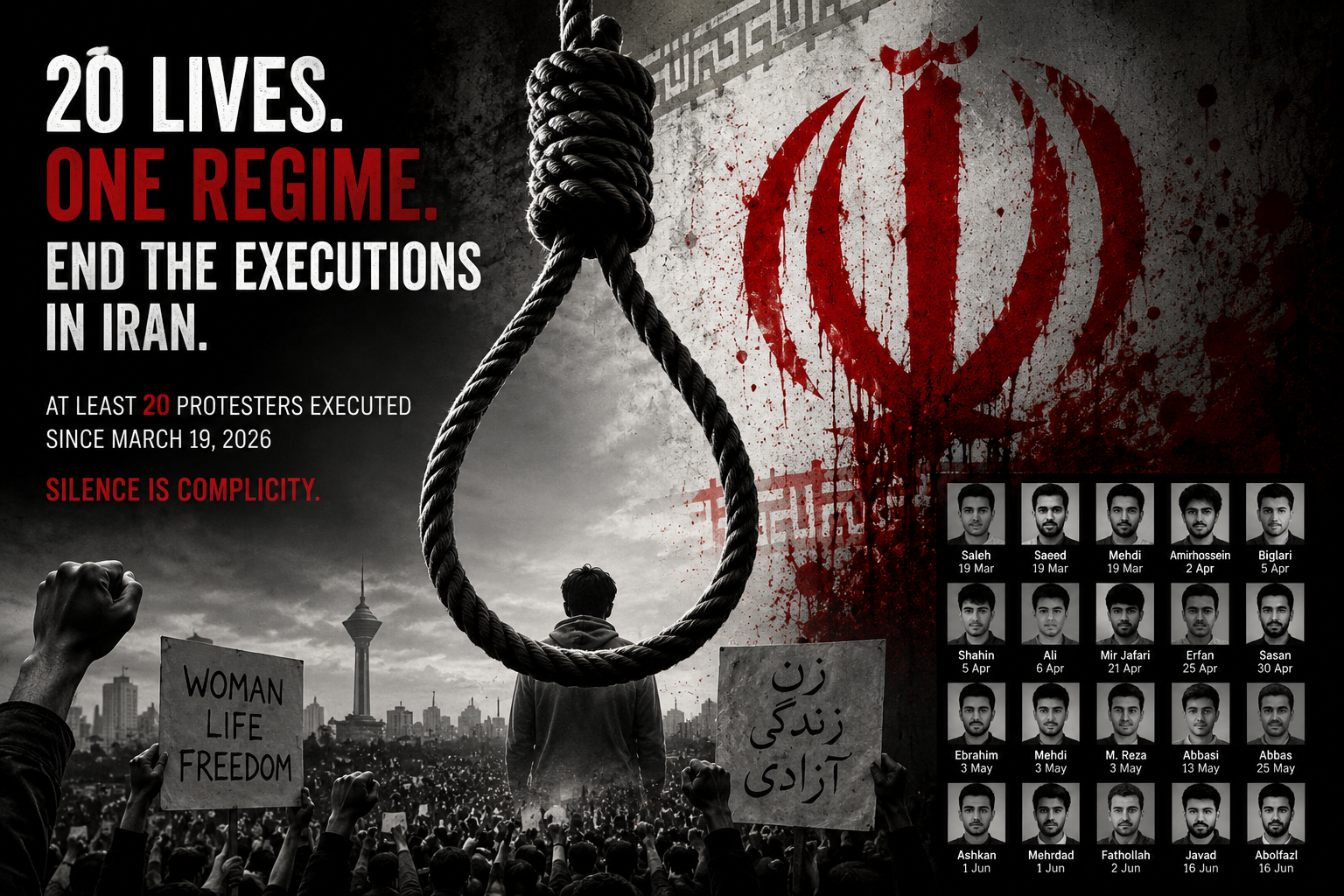
With their deaths, at least 20 people detained in connection with the December 2025–January 2026 protests have now been executed by the Islamic Republic since March 19, according to Iran Human Rights.
The executions have unfolded over less than three months.
They began with three protesters hanged in Qom on March 19 and have continued through Tehran, Mashhad, Karaj and other parts of Iran.
These are their names:
- Saleh Mohammadi — March 19, 2026
- Saeed Davodi — March 19, 2026
- Mehdi Ghasemi — March 19, 2026
- Amirhossein Hatami — April 2, 2026
- Mohammad Amin Biglari — April 5, 2026
- Shahin Vahedparast Kolor — April 5, 2026
- Ali Fahim — April 6, 2026
- Amir Ali Mir Jafari — April 21, 2026
- Erfan Kiani — April 25, 2026
- Sasan Azadvar — April 30, 2026
- Ebrahim Dolatabadinejad — May 3, 2026
- Mehdi Rasouli — May 3, 2026
- Mohammadreza Miri — May 3, 2026
- Mohammad Abbasi — May 13, 2026
- Abbas Akbari Feizabadi — May 25, 2026
- Ashkan Maleki — June 1, 2026
- Mehrdad Mohammadinia — June 1, 2026
- Fathollah Avari — June 2, 2026
- Javad Zamani — June 16, 2026
- Abolfazl Saedi — June 16, 2026
Iran Human Rights later documented this exact group of 20 as protesters executed in connection with the January uprising by June 16. iranhr.net
The Executions Began on March 19
The first executions connected to the January protests were carried out on March 19.
Saleh Mohammadi, Saeed Davodi and Mehdi Ghasemi were executed in Qom after being accused of involvement in the deaths of police officers during demonstrations on January 8.
Iran Human Rights described the executions as extrajudicial killings intended to create fear and suppress political dissent. iranhr.net
Only two weeks later, the execution campaign accelerated.
Amirhossein Hatami was hanged on April 2.
Mohammad Amin Biglari and Shahin Vahedparast Kolor followed on April 5, and Ali Fahim was executed the next day.
The defendants in that case had been accused of attacking a Basij facility in Tehran. Rights groups reported serious due-process violations, including denial of access to lawyers of their choosing and allegations that confessions were obtained through coercion. iranhr.net
Ten Protesters Executed by the End of April
By April 30, ten protesters connected to the January demonstrations had already been executed.
Sasan Azadvar became the tenth.
Iran Human Rights said his forced confession had been used as evidence and noted that independent information concerning the circumstances of his case remained limited. iranhr.net
The pattern was becoming unmistakable.
People arrested during political demonstrations were being moved through a justice system repeatedly criticized for rushed proceedings, lack of independent representation and the use of coerced confessions.
Then came May.
Three Men Executed in Mashhad on May 3
Ebrahim Dolatabadinejad, Mehdi Rasouli and Mohammadreza Miri were all executed on May 3.
The executions were publicly reported the following day.
Rasouli and Miri had been detained during the January protests in Mashhad. Hengaw reported that both men were sentenced to death on the basis of forced confessions obtained under torture. Hengaw (hengaw.net)
Iran Human Rights said the three were protesters arrested during the January 8 and 9 demonstrations in Mashhad and condemned their executions. iranhr.net
The distinction between May 3, the execution date, and May 4, the date the executions were reported, is important.
Political Executions Continue Into June
The campaign continued.
On June 1, Kurdish protesters Ashkan Maleki and Mehrdad Mohammadinia were secretly executed.
The Kurdistan Human Rights Network reported that the two men had been detained during the December–January protests, subjected to physical and psychological torture and denied lawyers of their own choosing.
They were executed without a final family visit. KHRN
Iran Human Rights said that by June 1, 17 January protesters had already been executed. iranhr.net
Fathollah Avari followed shortly afterward.
And today, June 16, Iranian authorities executed Javad Zamani and Abolfazl Saedi.
Iran’s judiciary accused the two men of leading armed unrest during January demonstrations in Shahrud and convicted them on charges including moharebeh, “corruption on earth,” national-security offences and destruction of property. Reuters
Their executions bring the documented total of January protesters executed since March 19 to at least 20.
This Is Not Normal Justice
These executions cannot be viewed as isolated criminal cases.
The repeated allegations surrounding them matter.
Human-rights organizations have documented claims of torture, forced confessions, denial of independent lawyers, exceptionally rapid trials, secret executions and families receiving little or no warning before sentences were carried out.
Some defendants faced allegations involving serious violence.
Those allegations should have been examined through transparent proceedings that could withstand independent scrutiny.
Instead, in multiple cases, the very evidence used to justify irreversible punishment has itself been challenged as the product of coercion.
The death penalty leaves no possibility of correcting a wrongful conviction.
When the state executes people after proceedings marked by credible allegations of torture and denial of basic due process, the result cannot simply be accepted as justice.
The Islamic Republic’s Execution Campaign Must Be Condemned
The execution of protesters and political detainees by the Islamic Republic must be condemned.
A state cannot answer widespread political dissent with gallows.
It cannot create legitimacy by killing people who rose against it.
It cannot silence a society indefinitely through executions, prisons and fear.
By June 16, twenty protesters connected to a single nationwide uprising have already been executed.
And they are not the only political executions taking place.
Iran Human Rights reports that between March 18 and June 16, Iranian authorities also executed 13 political prisoners affiliated with banned opposition organizations, as well as people sentenced to death on espionage charges. iranhr.net
The scale of this campaign should alarm the international community.
Remember Their Names
Statistics make repression easier to overlook.
Names make it harder.
Saleh Mohammadi.
Saeed Davodi.
Mehdi Ghasemi.
Amirhossein Hatami.
Mohammad Amin Biglari.
Shahin Vahedparast Kolor.
Ali Fahim.
Amir Ali Mir Jafari.
Erfan Kiani.
Sasan Azadvar.
Ebrahim Dolatabadinejad.
Mehdi Rasouli.
Mohammadreza Miri.
Mohammad Abbasi.
Abbas Akbari Feizabadi.
Ashkan Maleki.
Mehrdad Mohammadinia.
Fathollah Avari.
Javad Zamani.
Abolfazl Saedi.
As of today, June 16, 2026, these are at least twenty people whose lives ended at the hands of the Islamic Republic after their arrests in connection with the January protests.
Their executions should be documented, investigated and remembered.
And every remaining protest detainee facing a death sentence deserves immediate international attention before another name is added to this list.
Sources
https://iranhr.net/en/print/5/8879
https://www.iranhr.net/en/articles/8656
https://iranhr.net/en/articles/8667
https://iranhr.net/en/articles/8718
https://iranhr.net/en/print/5/8722
Leave a Reply