Recent months have seen widespread protests across Iran, driven by deep economic hardship, political frustration, and demands for basic rights and dignity. Reports from multiple sources indicate a significant death toll, though exact figures remain extremely difficult to verify due to ongoing internet shutdowns and restricted access to information.
According to reporting by Iran International, a London-based news organization, and analysis of information cited across multiple institutional and media sources, some investigations estimate that at least 12,000 people may have been killed during the latest nationwide crackdown, though figures vary and may be higher.
By contrast, official figures released by Iranian state authorities cite lower estimates, reporting approximately 2,000–3,000 deaths, including security personnel and others involved in the unrest. Independent human rights organizations and external monitoring groups have verified thousands of civilian casualties, but the full scale remains difficult to confirm independently due to restricted access.
A Pattern of Opaque Accountability
The ongoing internet blackout imposed by the Iranian government since early January has severely hindered transparent reporting by journalists and human rights monitors, limiting independent verification both inside and outside Iran.
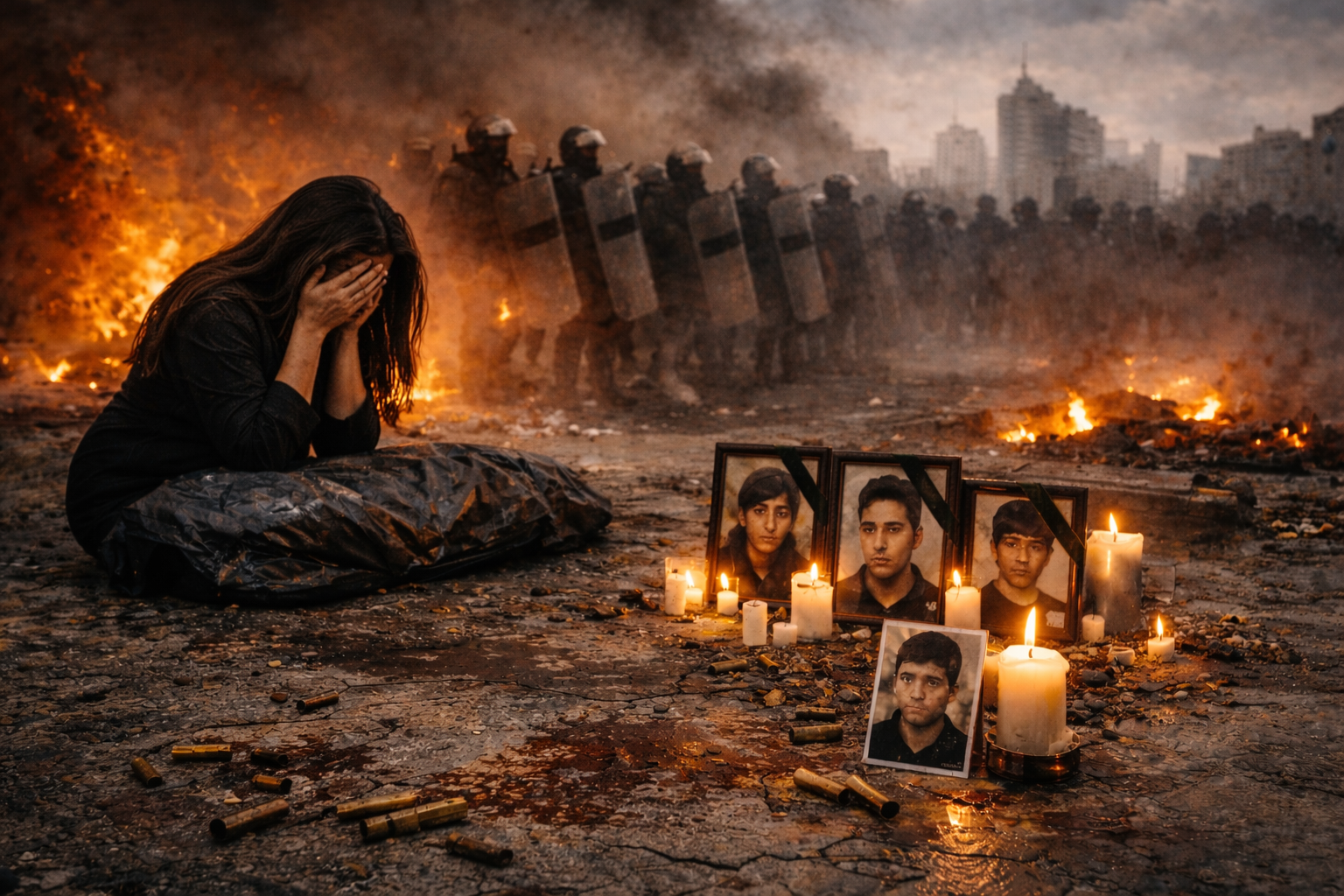
Beyond casualty estimates, multiple family testimonies and community reports describe additional pressure placed on relatives of victims in order to retrieve the bodies of their loved ones. According to these accounts, families have been asked to cover costs allegedly associated with ammunition used during shootings — a practice often referred to in social media and eyewitness reports as “bullet money.”
Additionally, some families report being pressured to falsely attribute the cause of death to clashes among protesters rather than to security forces, in exchange for the release of the body. These accounts have not been independently verified and are presented here as reported testimonies from affected families and witnesses.
Why This Matters
Whether confirmed figures reflect several thousand deaths or higher estimates suggested by independent investigations, the scale of loss represents a serious human rights crisis. The widespread use of force, combined with systematic restrictions on communication, has significantly obstructed credible documentation of events as they unfold.
This platform will continue to track, verify, and archive credible information as it becomes available, with the aim of ensuring that these events — and the voices of those affected — are preserved as part of the public and historical record.
Updated: 2 August 2026
Iran Protest Death Toll: Documented Cases and Estimates Exceeding 40,000
Nationwide protests erupted across Iran on 28 December 2025 amid worsening economic conditions, political repression, and demands for fundamental rights, dignity, and an end to the rule of the Islamic Republic. Iranian authorities responded with widespread arrests, severe restrictions on communication, and the unlawful use of lethal force. The deadliest phase of the crackdown reportedly occurred on 8 and 9 January 2026, during a near-total internet blackout.
The precise number of people killed remains contested. Restrictions on internet access, pressure on witnesses and victims’ families, the absence of independent access to many affected locations, and conflicting official narratives have made comprehensive verification extremely difficult. Available figures must therefore be clearly distinguished as officially acknowledged deaths, individually documented cases, cases under investigation, or broader estimates.
Documented Figures and Competing Estimates
On 21 January 2026, Iran’s Supreme Council of National Security acknowledged that 3,117 people had died during the uprising. Iranian authorities did not characterize all of those killed as protesters or accept responsibility for their deaths, instead attributing much of the violence to alleged “terrorist” activity.
On 16 January, UN Special Rapporteur on Iran Mai Sato stated that more than 5,000 people may have been killed by security forces. She also noted that information received from medical sources suggested that the death toll could potentially be as high as 20,000. Amnesty International has emphasized that the internet shutdown and reprisals against victims’ families have made it impossible to establish a complete and independently verified total.
By the forty-eighth day of the protests, the Human Rights Activists News Agency, HRANA, reported that it had documented 7,008 deaths. Its figures included:
- 6,509 protesters
- 219 children under the age of 18
- 214 members of government or affiliated forces
- 66 non-protester civilians
HRANA stated that an additional 11,730 reported deaths remained under investigation. It also documented 53,344 arrests and 25,845 injured civilians during the same reporting period. These figures represent cases documented according to HRANA’s methodology and should not be interpreted as the final total.
On 25 January 2026, Iran International reported that more than 36,500 people had been killed by security forces during the crackdown, particularly on 8 and 9 January. The outlet stated that its estimate was based on classified reports attributed to Iranian security agencies, medical information, eyewitness accounts, and testimony from victims’ families. Iran International also acknowledged that independent verification remained impossible because of security restrictions and communication blackouts.
Statements by President Donald Trump
The scale of the reported killings was subsequently acknowledged at the highest level of the United States government, although the figures cited by President Donald Trump should be understood as public statements rather than independent verification.
On 20 February 2026, President Trump stated that approximately 32,000 people had been killed during the crackdown. In a nationally televised address on 1 April, he cited a higher figure of 45,000 deaths.
On 16 June 2026, during an exchange with reporters documented in the official records of the United States government, President Trump stated that at least 42,000 protesters had been killed in Iran. He repeated that they were unarmed people killed for participating in protests.
These statements demonstrate international recognition of reports that the death toll may have exceeded 40,000. However, they do not constitute an independently verified casualty count. The origin and methodology behind the figures cited by President Trump have not been publicly disclosed.
Internet Blackout and Obstruction of Verification
The prolonged internet shutdown imposed by the Islamic Republic severely restricted communication between people inside Iran and the outside world. Journalists, human rights organizations, medical personnel, and victims’ families were prevented from reporting freely or transmitting evidence.
Amnesty International concluded that the blackout substantially obstructed documentation of the killings. Despite these restrictions, verified videos and eyewitness accounts examined by human rights organizations showed security forces firing rifles and shotguns at protesters, frequently targeting their heads and upper bodies.
The inability to obtain unrestricted access means that documented totals should be regarded as minimum figures rather than a complete account of the casualties.
Pressure and Extortion Directed at Victims’ Families
Human Rights Watch and other monitoring organizations documented reports that authorities pressured families to remain silent about how their relatives had been killed. Some families were allegedly required to declare that their relatives were members of the Basij or had been killed by protesters before being permitted to retrieve their bodies.
Other families reported being required to pay substantial sums for the release of their relatives’ remains. These payments have frequently been described by witnesses and media reports as “bullet fees” or “bullet money.”
The United Nations Independent International Fact-Finding Mission on Iran also recorded testimony concerning threats, coerced official narratives, restrictions on burials, and demands for payment before bodies were released. These practices indicate that repression continued after the killings through intimidation, concealment of evidence, and interference with families’ right to mourn.
Why This Matters
The available figures differ substantially because they are based on different methods and levels of access. The Iranian authorities acknowledged 3,117 deaths; human rights organizations documented thousands of individual cases and many additional cases under investigation; Iran International estimated more than 36,500 deaths; and President Trump publicly cited figures between 32,000 and 45,000.
These numbers should not be presented as equally verified. Nevertheless, the available evidence consistently demonstrates that thousands of people were killed during an exceptionally violent crackdown and that the full number may be significantly higher than the cases currently documented by name.
The combination of mass lethal force, widespread arrests, internet shutdowns, pressure on victims’ families, and obstruction of independent investigations represents a grave human rights crisis. Iran Screams will continue to document, verify, update, and preserve available evidence so that the victims and the scale of the repression are not erased from the public and historical record.
Sources and Further Reading
- Amnesty International: What happened during the protests in Iran?
- Amnesty International: Six months after the January protest massacres
- HRANA: Documented figures through the forty-eighth day of protests
- Iran International: Report estimating more than 36,500 deaths
- CBS News: Trump cites 32,000 deaths, 20 February 2026
- Associated Press: Transcript of Trump’s 1 April address citing 45,000 deaths
- Official U.S. government transcript: Trump cites at least 42,000 deaths, 16 June 2026
- Human Rights Watch: Evidence of countrywide massacres and pressure on families
- Center for Human Rights in Iran: Testimonies concerning killings and pressure on families