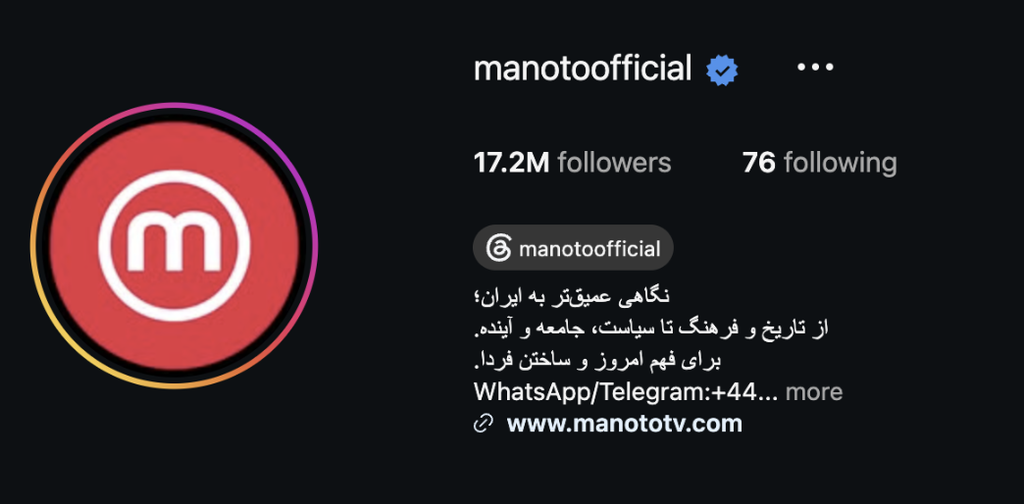
On 13 October 2024, a video featuring me was published on the verified Instagram account of Manoto TV, a prominent Persian-language media outlet whose account had more than 17 million followers.
I recorded and submitted the video myself, with my face and identity clearly visible. In it, I openly expressed my opposition to the Islamic Republic, described the regime as corrupt and oppressive, supported the Iranian people’s struggle for freedom, and called for a future Iran without the Islamic Republic.
In addition to being published on Instagram, the video was broadcast on Manoto TV’s satellite television channel, making my face, identity, and political statements visible to Persian-speaking audiences both inside Iran and internationally.
At the time the publication was documented, Manoto TV’s original Instagram post had received more than 800,000 views, 28,000 likes, and 2,000 comments. The video was subsequently copied and republished by other accounts and across several platforms, further increasing my public visibility and making my political position accessible to a much wider audience.
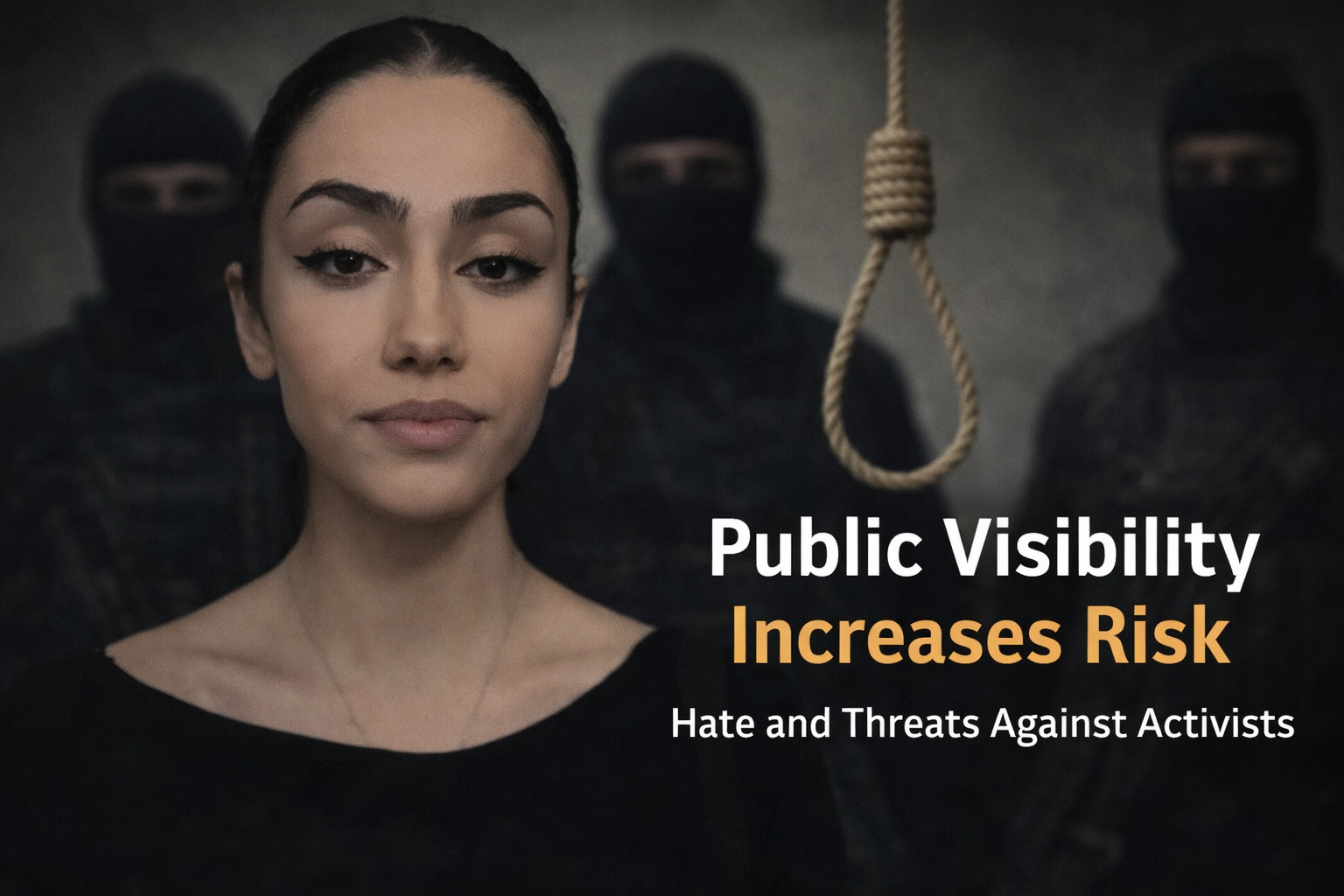
Alongside messages of support, the video also attracted a large volume of hostile responses, including harassment, threats, and intimidation. The nature and scale of these reactions reflect the risks faced by individuals who openly express political positions related to Iran, particularly when such expression reaches a mass audience.
This experience highlights how public exposure through major media platforms can quickly turn political expression into a source of personal risk. For those who document, comment on, or show solidarity with protests and repression in Iran, visibility itself can carry serious consequences.
The incident illustrates a broader pattern in which political expression — even outside Iran — is met with coordinated hostility and attempts at silencing.
🔗 Referenced post: